Crash Games Exposed: The High-Stakes Ride of Multipliers, Sudden Crashes, and Hidden Probabilities
The Surge of Crash Games in Online Betting
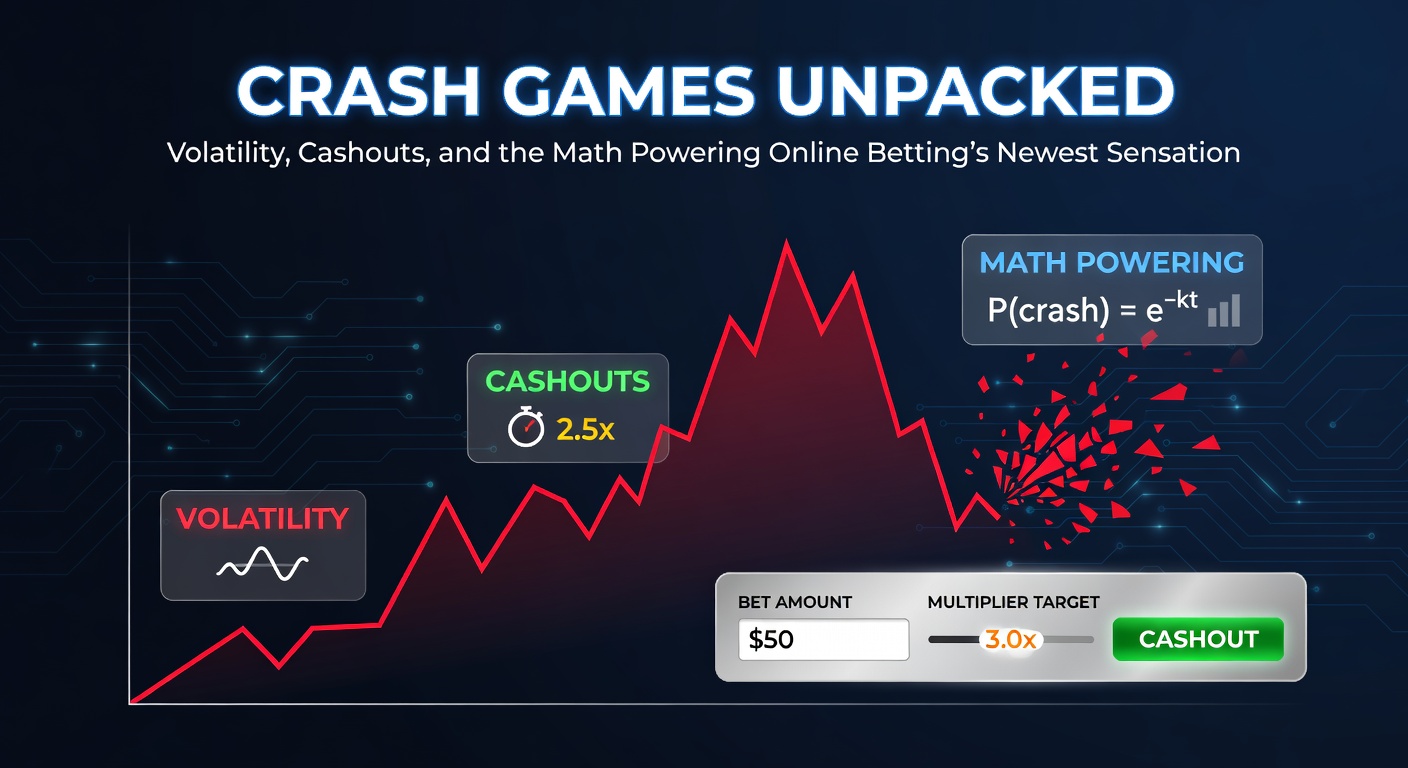
Online betting platforms have seen crash games explode in popularity over recent years, drawing players with their simple yet nerve-wracking mechanics where a multiplier climbs steadily until it crashes at a random point, forcing quick decisions on when to cash out. Data from industry trackers like SoftSwiss iGaming reports reveals that crash titles accounted for over 15% of live casino plays in early 2026, a jump from single digits just two years prior, while platforms in Europe and North America report daily active users spiking during peak hours. Players bet an amount, watch the line rise—say from 1x to 2x, 5x, or higher—and hit cashout before the inevitable drop, but the crash point hides behind algorithms designed for unpredictability.
What's interesting is how these games blend elements of slots and sports betting, offering instant action without reels or teams, and that's pulled in a diverse crowd from casual spinners to high-rollers chasing 100x multipliers that pop up rarely but fuel the hype. Turns out, titles like Aviator from Spribe or JetX have racked up millions in wagers monthly; one platform shared figures showing average session times stretching to 20 minutes as users ride multiple rounds, building tension round after round.
How Crash Games Actually Unfold Round by Round
Each round kicks off with players placing bets during a short window—typically 5 to 10 seconds—after which a rocket, plane, or diamond graphic launches, its multiplier ticking up in real time from 1.00x onward, sometimes hitting 10x within seconds while others crawl slower to build suspense. The server generates the crash point using a random number generator (RNG) seeded before the round starts, ensuring fairness through cryptographic hashing that players can verify post-round on provably fair systems.
Observers note that rounds last anywhere from 1 second to over a minute, with the multiplier displayed to hundredths like 1.23x or 47.89x, and cashouts lock in winnings instantly at the current value minus any fees, but miss the timing and the bet vanishes. Take a typical sequence: bets flood in from hundreds of players, the line surges past 1.5x drawing early cashouts, pushes to 3x where most bail, then crashes at 4.2x leaving late holdouts empty-handed; repeat this 50 times an hour and patterns emerge, yet randomness reigns supreme.
And here's where it gets real—multiplayer lobbies show live cashout stats, like 60% out at 1.5x and 20% at 2x, adding social pressure that amps the thrill, although data indicates this visibility doesn't sway outcomes since each crash stands alone.
Volatility: The Wild Swings That Define the Experience
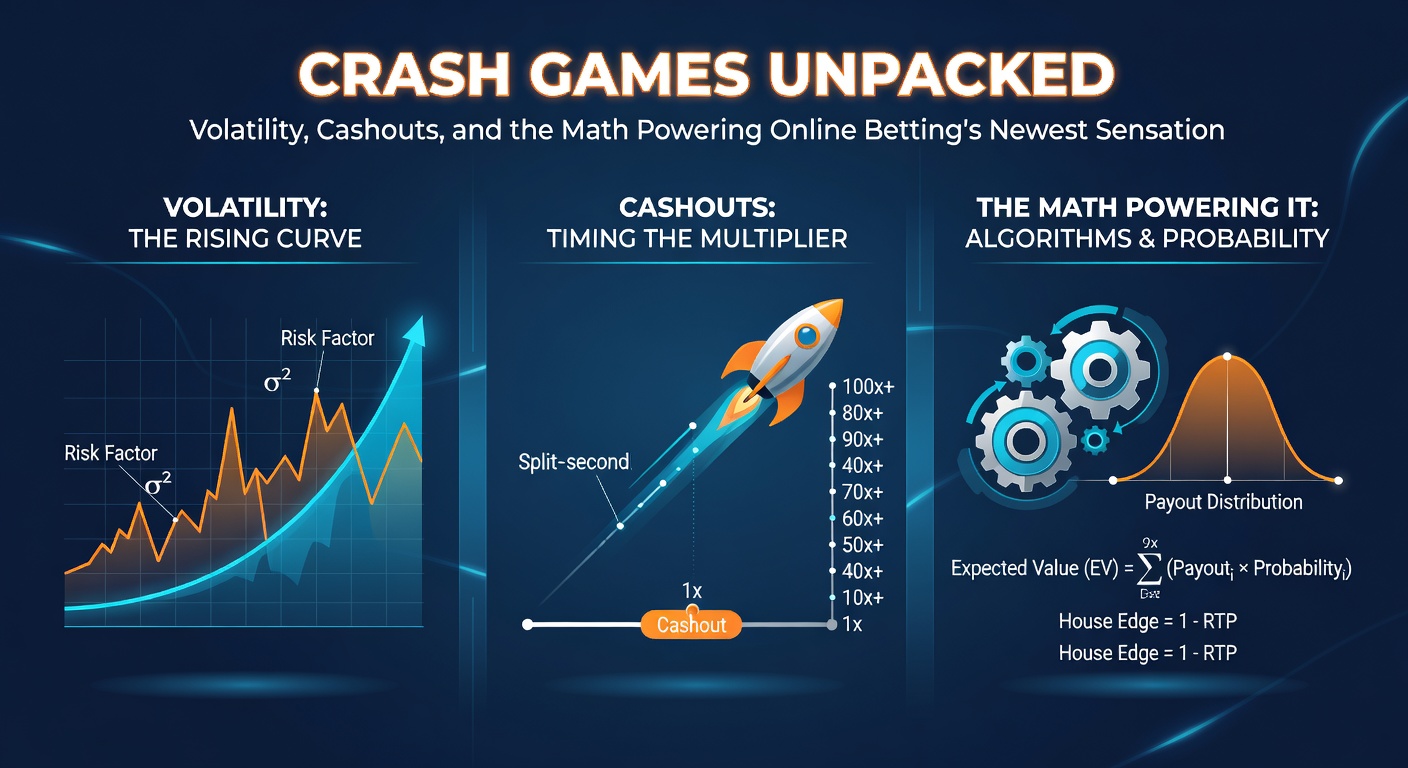
Crash games pack sky-high volatility, meaning payouts swing dramatically from tiny 1.01x wins to rare massive hits, unlike steady slots where variance stays middling; researchers at the Australian Gambling Research Centre analyzed crash mechanics and found standard deviations in returns exceeding 50% per session, far above blackjack's 1-2%. Low crashes dominate—over 50% end below 2x according to aggregated platform data—keeping house edges intact around 1-3%, but those outlier 50x+ booms lure players back, creating boom-bust cycles that sessions lasting 30 minutes or more.
But the reality is, volatility manifests in streaks; one study of 10,000 rounds showed 70% between 1x and 5x, 25% from 5x to 20x, and just 5% above, so while a 100x crash might hit once every few hundred games, the math ensures the house grinds steady profits. Players often chase these highs after strings of lows, a pattern experts have observed across high-volatility formats, yet the RNG's memoryless nature resets every round without regard for past crashes.
Cashouts Under the Microscope: Timing and Its Pitfalls
Cashout timing forms the core skill illusion in crash games, as players weigh greed against fear while the line climbs, but figures reveal average cashouts cluster around 1.8x to 2.2x across major sites, balancing risk without the full plunge. One case from a 2025 platform audit showed top earners cashing at fixed points like 2x every round, netting steady 100% returns over thousands of plays, whereas auto-cashout tools set by users mimic this but falter during unexpected surges.
Yet volatility bites hard; data from beta tests indicates that waiting past 2x succeeds 40% of the time but wipes bets 60% as crashes cluster unpredictably, and social features amplify this with leaderboards flashing mega-wins that tempt overrides. It's noteworthy that May 2026 updates on platforms like Stake and Roobet introduced adjustable auto-cashouts with multipliers up to 100x, yet usage stats show most stick below 5x, reflecting the math's cold grip.
The Math Engine: RTP, House Edge, and Provable Fairness
At the heart pumps a house edge of 1% to 5% baked into the crash distribution, where return to player (RTP) hovers at 97-99% over infinite rounds—meaning for every $100 wagered, $97-99 returns long-term—powered by geometric or exponential probability curves that make low multipliers frequent while extremes taper off. Developers like Spribe disclose crash formulas using seeds and hashes; for instance, a hash combines server seed, client seed, and nonce to output a crash value via HMAC-SHA256, verifiable by anyone plugging in the numbers post-round.
Turns out, this provably fair tech, pioneered in crypto casinos around 2016, lets players confirm no tampering occurred, with tools auto-checking thousands of rounds; a report from the Gaming Laboratories International certified over 50 crash variants meeting ISO 17025 RNG standards. House edge derives from the crash function—often crash = 1 / (1 - random(0,0.99)) or variants—ensuring the max theoretical multiplier averages out below 100x despite outliers, and simulations confirm RTP holds even in short bursts of 1,000 rounds.
So, while players decode seeds for transparency, the probabilities stay fixed; experts who've reverse-engineered popular scripts note the curve skews heavily low, where 99% of crashes fall under 20x, grinding edges relentlessly although the rush masks it round by round.
Popularity Drivers and Global Traction in 2026
Crash games thrive on mobile-first design and crypto integration, with platforms reporting 70% of traffic from phones in May 2026, and titles supporting bets from $0.10 to $10,000 fueling accessibility. Aggregated data shows crypto volumes surging 40% year-over-year in crash lobbies, as instant deposits pair with pseudonymous play, while regulated markets like Ontario enforce age gates and limits that haven't dimmed appeal.
One notable trend: esports crossovers, where crash multipliers tie into tournament odds, blending formats; platforms in Brazil and India log highest growth, with daily wagers topping $50 million combined per recent figures. But here's the thing—despite the buzz, session data flags extended play risks, prompting features like 60-minute cooldowns in some jurisdictions.
Navigating Regulations Across Borders
Regulators worldwide scrutinize crash games for fairness and addiction potential; the New Jersey Division of Gaming Enforcement audited RNGs in 2025, approving variants with 99% RTP disclosures, while Sweden's Spelinspektionen mandates crash point logs for audits. In Australia, state bodies like those in New South Wales cap bet sizes on high-volatility crash titles to curb losses, and EU frameworks under MGA require responsible gaming pop-ups after 20 minutes.
Players in licensed markets find protections like deposit limits standard, ensuring the math doesn't overwhelm unchecked, although offshore sites skirt these with provably fair as the sole safeguard.
Wrapping Up the Crash Phenomenon
Crash games stand as online betting's pulse-pounding evolution, where volatility fuels adrenaline, cashouts test reflexes, and math enforces unyielding balance amid the chaos. Data underscores their grip—billions wagered yearly, RTPs holding firm, provable fairness building trust—yet the random crashes remind everyone that while multipliers soar briefly, the house curve always bends back. As platforms innovate with VR lobbies and AI-tuned curves into late 2026, the core equation persists: bet, watch, cash or crash, repeat.