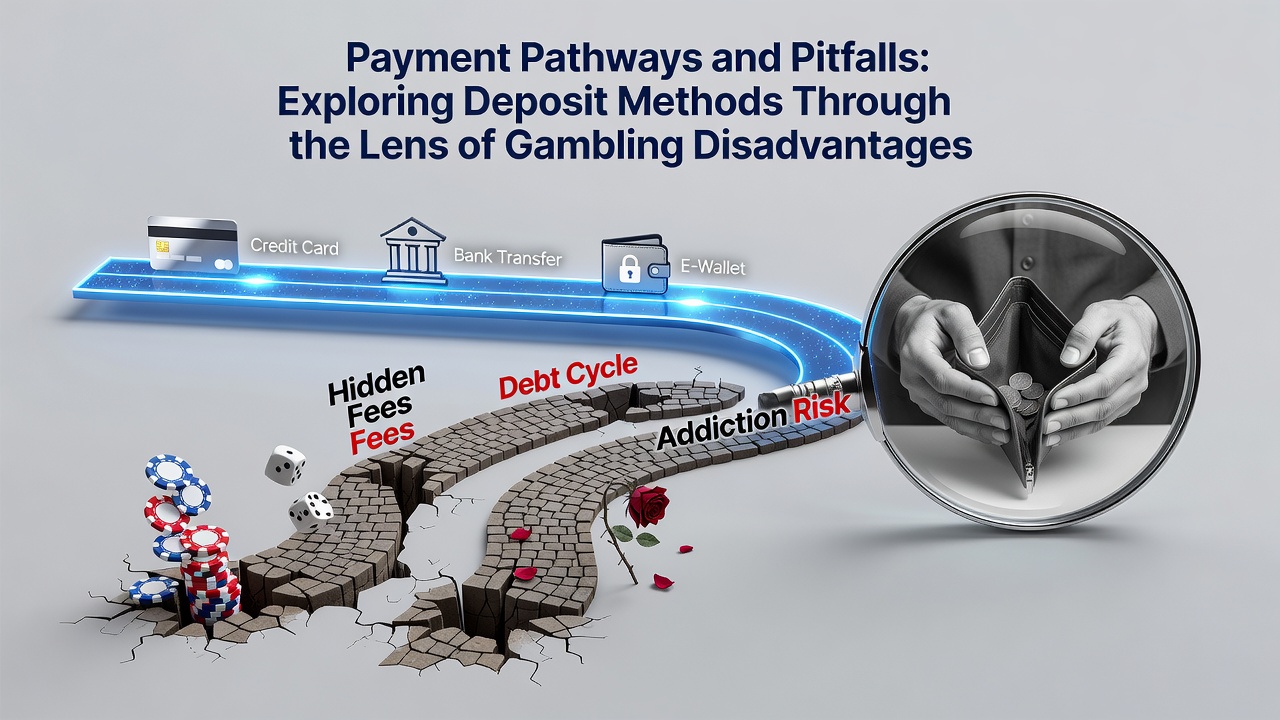
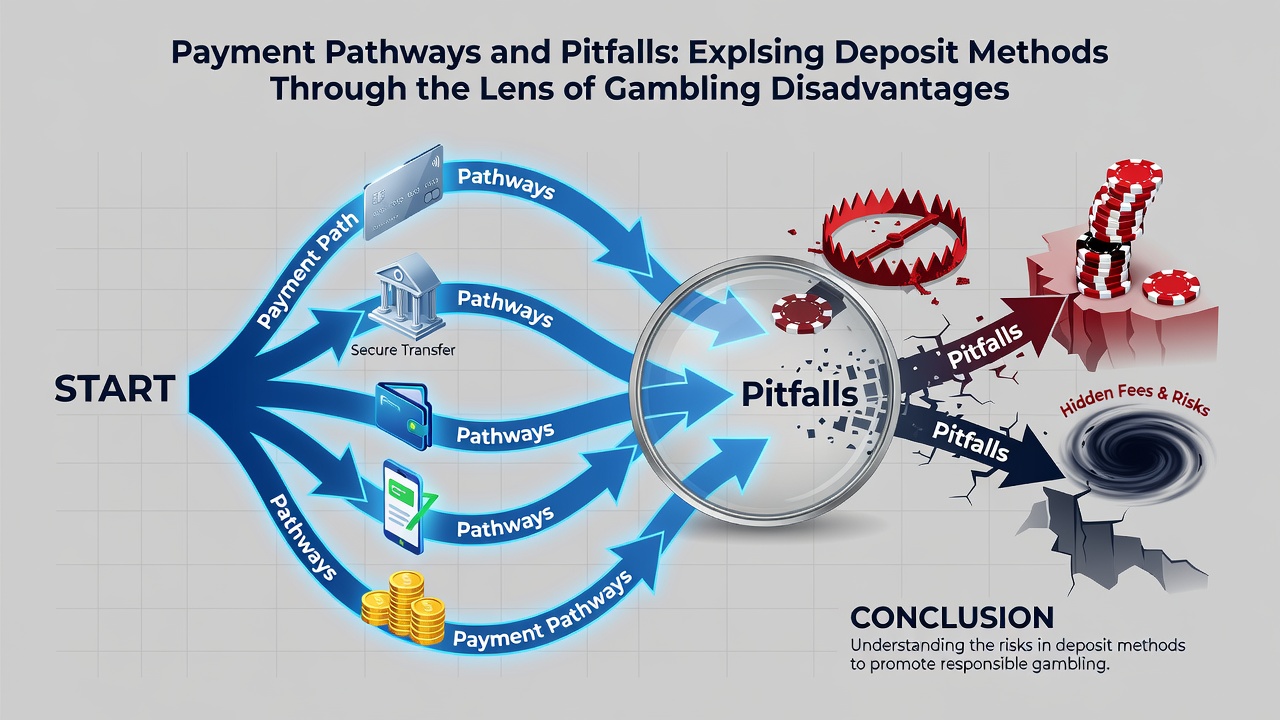
Payment Pathways and Pitfalls: Exploring Deposit Methods Through the Lens of Gambling Disadvantages
Deposit methods form the entry point for online gambling activity, yet they carry specific disadvantages that affect users across different platforms and regions. Credit cards, e-wallets, bank transfers, and cryptocurrencies each present distinct processing times, fee structures, and security profiles that can lead to financial strain or access barriers when tied to gambling accounts. Data from regulatory filings shows that transaction costs and approval delays vary widely depending on the chosen pathway, while certain methods expose users to higher risks of unauthorized activity or account freezes during verification processes.
Common Deposit Methods and Their Processing Characteristics
Bank transfers remain a staple for larger sums because they connect directly to personal accounts, although they often require one to three business days for clearing which can interrupt immediate play sessions. E-wallets such as PayPal or Skrill allow faster movement of funds in many jurisdictions, but they impose per-transaction fees that accumulate when users make repeated small deposits. Credit and debit cards provide near-instant approval in supported markets, yet issuers in several countries apply cash-advance classifications that trigger immediate interest charges and separate limits separate from standard purchases.
Cryptocurrency options have gained traction since their introduction in the mid-2010s, offering borderless transfers with lower intermediary involvement. Blockchain confirmations typically complete within minutes to an hour, but price volatility means the deposited value can fluctuate before it reaches the gambling platform. Observers note that users in regions with strict banking regulations often turn to these digital assets precisely because traditional channels face restrictions or higher scrutiny from financial institutions.
Financial and Operational Disadvantages
Fees represent one of the most consistent drawbacks across methods. Some e-wallet providers add 1 to 3 percent on top of base transaction amounts, while certain card networks treat gambling deposits as high-risk and levy additional surcharges that platforms may pass along to the user. Research indicates that these layered costs reduce the effective balance available for play and can compound over multiple sessions when users do not track cumulative charges.
Processing limits create another layer of friction. Daily or monthly caps imposed by banks or payment processors can block larger intended deposits, forcing users to split transactions across several days or alternative accounts. Such fragmentation increases the total number of fees incurred and raises the chance of triggering fraud alerts that temporarily suspend access. In August 2026, updates to cross-border payment rules in the European Union are scheduled to tighten verification requirements for digital wallets, which may extend approval times for users outside the bloc who rely on these pathways.
Security and Compliance Risks
Data transmission during deposit transactions remains vulnerable to interception when platforms or processors use outdated encryption standards. Reports from cybersecurity firms document instances where compromised payment credentials led to unauthorized withdrawals from linked bank accounts, particularly when users reused passwords across multiple gambling sites. Two-factor authentication helps mitigate these issues, yet adoption rates differ among operators and payment providers.
Regulatory compliance adds further complexity. Financial intelligence units in Australia and Canada require enhanced due diligence for transactions exceeding certain thresholds, which can result in delayed funds release or requests for source-of-funds documentation. These requirements protect against money laundering but create administrative burdens that slow deposit processing and, in some cases, lead to account restrictions until paperwork clears.
Behavioral and Accessibility Concerns
Instant deposit options can facilitate continuous play by removing natural pauses between funding decisions. Studies from academic institutions in North America have tracked correlations between rapid payment approval and extended session lengths, although causation remains difficult to isolate from other variables. Those who study gambling patterns point out that easy access to multiple funding sources may encourage users to exceed pre-set budgets when initial deposits do not yield expected outcomes.
Geographic restrictions further limit choices. Users in jurisdictions where certain card networks block gambling merchants must rely on workarounds such as prepaid vouchers or third-party processors, which often carry higher fees and fewer consumer protections. This patchwork of availability creates uneven experiences depending on location and chosen payment rail.
Conclusion
Payment pathways in gambling environments involve trade-offs between speed, cost, security, and regulatory compliance. Each method carries documented disadvantages that range from direct fees to indirect risks of data exposure and operational delays. Figures from industry reports and government oversight bodies show these factors influence both accessibility and user outcomes across different markets. As payment technologies and regulations continue to evolve, the specific pitfalls associated with deposit methods remain central to understanding the broader financial dynamics of online gambling participation.