
The Structural Decisions That Shape Risk Allocation in Virtual Baccarat Formats
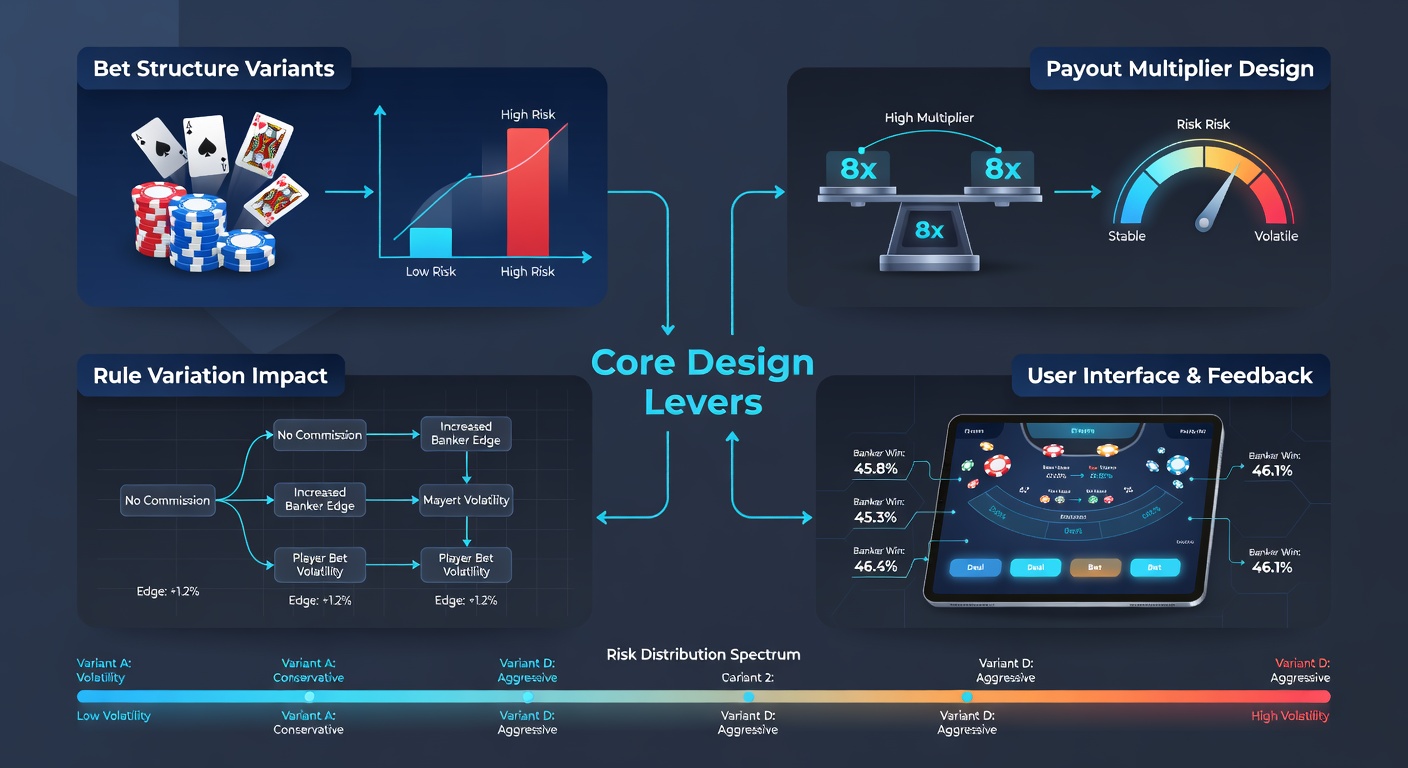
Digital baccarat presents a range of rule variations and interface settings that directly affect how risk spreads between player bets, banker bets, and side wagers across different game versions. These choices include the number of decks in play, commission rates on winning banker hands, drawing rules for third cards, and the presence or absence of live dealer streams versus RNG-driven tables, each calibrated to shift expected value and volatility in measurable ways.
Core Mechanics and Their Impact on Expected Returns
Standard eight-deck digital baccarat maintains a house edge near 1.06 percent on banker bets after the standard 5 percent commission, while player bets carry an edge of 1.24 percent and tie bets reach approximately 14.4 percent according to probability models used by game developers. Adjustments to deck count or commission percentages alter these figures immediately. Some platforms reduce the banker commission to 4 percent in specific variants, which lowers the house edge on that wager to around 0.6 percent yet increases the frequency of certain payout patterns that redistribute short-term variance among participants.
Researchers examining RNG implementations note that single-deck versions accelerate decision cycles and modify the odds on third-card draws, producing a slightly different risk curve compared with multi-deck formats. Data from regulatory testing laboratories show that these changes remain within approved tolerance ranges while still creating distinct player experiences across sessions.
Variant-Specific Rule Sets and Volatility Patterns
Mini-baccarat tables often compress the layout into a faster format with lower minimum bets, yet retain the same core drawing rules as full-size versions. Speed baccarat accelerates card reveals through automated shufflers or virtual decks, shortening the time between resolutions and thereby concentrating risk exposure over more hands per hour. Live dealer streams introduce human-paced timing that some observers link to steadier bankroll movement, although the underlying probabilities stay identical to their RNG counterparts.
Side bet options such as dragon bonus or panda 8 introduce separate payout tables that carry house edges between 2.5 and 10 percent depending on the exact multiplier structure. Game designers place these wagers adjacent to primary bets so players encounter them within the same interface flow, which influences how risk capital gets allocated during individual rounds. Studies from probability research groups indicate that players who combine primary and side wagers experience wider swings in session outcomes than those who stay with banker or player bets alone.
Regulatory Calibration and Platform Implementation
Testing standards applied by bodies such as the New York State Gaming Commission require independent verification that each variant matches its published return-to-player percentage before deployment. In Canada, the Alcohol and Gaming Commission of Ontario applies similar review processes that examine random number generator certification and payout consistency across different baccarat skins on teh same platform.
Design teams adjust parameters like reshuffle frequency and card burn rates to maintain target volatility levels while complying with these requirements. One documented approach involves altering the number of cards removed after each shoe to fine-tune the rate at which composition-dependent strategies lose relevance, which in turn affects how risk accumulates over extended play sequences.
Interface Elements That Guide Bet Distribution
Digital interfaces often highlight recommended bets or display running shoe statistics that steer attention toward lower-house-edge options. Developers embed these visual cues without changing underlying probabilities, yet the placement influences how players spread their stakes across multiple wagers within a single round. Some platforms add quick-bet buttons sized proportionally to historical wager frequency, creating a subtle feedback loop that shapes risk exposure patterns observed in session data.
Multiplayer lobbies allow participants to observe collective betting trends in real time, which can prompt shifts in individual risk allocation as players respond to displayed outcomes from others at the table. This social layer operates independently of the mathematical framework yet remains part of the overall design architecture governing how risk moves through the game ecosystem.
Future Adjustments Scheduled for 2026
Industry reports indicate that several major platforms plan to introduce updated baccarat variants in May 2026 that incorporate revised side-bet structures and optional insurance features. These modifications follow extended simulation testing aimed at balancing new payout tables against established house-edge limits. Regulatory filings from multiple jurisdictions show that the changes will require fresh certification rounds to confirm that risk distribution metrics remain within approved boundaries.
Conclusion
The design decisions embedded in digital baccarat variants determine precise differences in house edge, volatility, and bet frequency that together define how risk distributes across player sessions. Rule adjustments, interface layouts, and regulatory constraints interact to produce measurable variations between standard, mini, speed, and live formats. Continued monitoring by testing laboratories and academic researchers supplies the data needed to track these distributions as new implementations reach the market.